The image shows a person wearing medical gloves handling a transparent plastic bottle with a green cap, which appears to be a medication vial, within a medical setting.

Sedation Dentistry in San Jose

Dental anxiety is common — millions of people feel nervous or avoid dental care because of fear, a strong gag reflex, or difficulty sitting through longer treatments. If dental visits cause you stress, the office of Today's Dentistry San Jose offers thoughtful, evidence-based sedation options designed to make appointments calmer and more manageable. Our goal is to help patients get the care they need with safety, dignity, and minimal discomfort.

Avoiding routine care or delaying necessary treatment because of anxiety can lead to more complicated problems later. Sedation dentistry is not about putting you to sleep unnecessarily; it’s about creating a controlled, relaxed state so treatment can be delivered efficiently and with less emotional strain. Many patients find that sedation transforms an experience they once dreaded into one they can complete with confidence.

We approach sedation as a tool in a broader care plan. Before recommending any form of sedation, our team reviews your medical history, current medications, and the type of dental work planned so we can select the safest, most effective option for you. You’ll remain informed at every step — from the initial consultation through recovery.

Below you’ll find clear, practical information about why patients choose sedation, how different methods work, what to expect before and after treatment, and how we prioritize safety and monitoring. If you’re unsure whether sedation is right for you, this page is a good starting point for a conversation with our team.

What sedation dentistry actually does for patients

Sedation dentistry reduces anxiety and sensory awareness so patients can receive dental care without the disruptive stress that often accompanies appointments. Depending on the method used, sedation can produce a light sense of relaxation, a deeper state of calm while remaining responsive, or, in rare cases that require hospital settings, general anesthesia supervised by an anesthesiologist.

The immediate benefit is comfort: fewer fight-or-flight responses, reduced gagging, and less focus on the noise, smells, and sensations that make dental visits difficult for many people. For those who need longer or more complex treatment, sedation can make it possible to complete multiple procedures in a single visit instead of requiring repeated appointments.

Equally important is the psychological benefit. Patients who have used sedation often report less anticipatory stress about future visits; when a visit goes smoothly, it becomes easier to maintain regular dental care. Our team sees sedation as a bridge — a way to restore a patient’s access to routine, preventive, and restorative services.

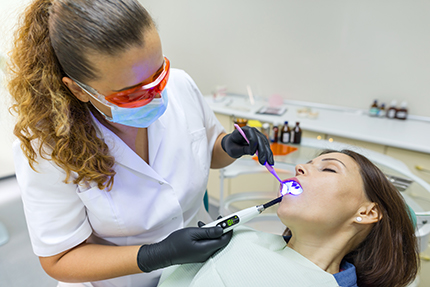
The image features a dental hygienist performing a teeth cleaning procedure on a patient, with the dental hygienist using an ultrasonic scaler to clean the patient s teeth.

Common reasons patients elect to be sedated

People choose sedation for many practical and emotional reasons. For some, dental phobia is so intense that it prevents any care; for others, a sensitive gag reflex, very sensitive teeth, or an inability to remain still due to a medical or cognitive condition makes routine treatment impractical without sedation.

Sedation also helps when treatment will be lengthy or invasive. Procedures that require extended time in the chair can be uncomfortable physically and mentally — sedation helps patients tolerate these visits without the fatigue and stress that often accompany long appointments. Choosing sedation can reduce the need for multiple visits in situations where combining work into one appointment is preferable.

Finally, sedation can be a practical accommodation for children, patients with special needs, or anyone who has had traumatic dental experiences in the past. By providing a calmer, more predictable environment, sedation enables clinicians to work more efficiently while preserving patient dignity and cooperation.

  • Dental phobia — For those whose fear prevents them from getting basic care, sedation can make treatment possible and help restore oral health.

  • Anxiety about a particular procedure — Even otherwise comfortable patients may prefer sedation for treatments that trigger specific worries or discomfort.

  • Extensive dental work — Sedation helps patients remain comfortable during prolonged appointments and can reduce the number of visits needed to complete treatment.

  • Powerful gag reflex — When gagging interferes with care, appropriate sedation can suppress the reflex and allow safe, thorough treatment.

  • Sensitive teeth and gums — Hypersensitivity to instruments, suction, or water spray can make even simple procedures uncomfortable; sedation smooths the experience.

  • Difficulty sitting still — Young children, patients with certain disabilities, or those with medical conditions that limit sitting tolerance may benefit from sedation to receive routine and restorative care.

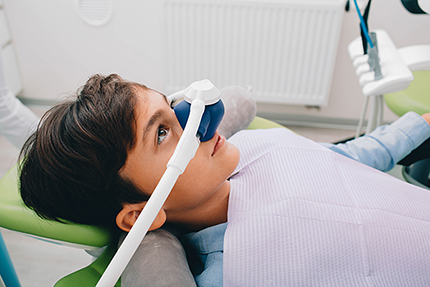
A young person sitting in a dental chair with a dental device on their face, likely for an orthodontic procedure, while looking at the camera.

How clinicians choose the right sedation method

Selecting a sedation technique starts with a careful assessment of each patient’s health, medication list, anxiety level, and the complexity of the planned procedure. Our team uses this information to recommend an approach that balances comfort with safety. The least intensive option that achieves the desired level of relaxation is usually preferred.

Sedation exists on a continuum: minimal methods help you relax while you remain fully aware, moderate approaches may leave you drowsy with partial memory gaps, and deep sedation or general anesthesia renders a patient less responsive and is typically limited to hospital settings. For most office-based dental care, conscious or moderate sedation provides effective relief.

Throughout treatment, patients are continuously monitored. Vital signs, oxygen levels, and responsiveness are tracked so the clinical team can adjust medications as needed. This vigilance helps ensure predictable, controlled sedation that supports both patient comfort and clinical safety.

Conscious versus deep sedation: what to expect

Conscious (or moderate) sedation reduces anxiety and often creates partial memory of the procedure while preserving the patient’s ability to respond to verbal cues. Breathing is usually unassisted and cardiovascular function remains stable under proper supervision. This level of sedation is commonly used in-office for routine and more complex dental treatments.

Deep sedation and general anesthesia create a deeper state of unconsciousness and are typically reserved for cases where office-based sedation is not appropriate. When deep sedation is necessary, care is provided in a setting equipped for advanced airway management and with personnel trained in anesthesia.

Office-based conscious sedation and the common delivery methods

In many cases, conscious sedation provided in the dental office offers an excellent balance of comfort and control. The method chosen depends on the patient’s needs and medical profile. Below are the most frequently used office techniques and what patients can expect from each.

Your clinician will explain preparation steps, expected effects, and any activity restrictions after the appointment so you know what to plan for on the day of treatment and during recovery.

  • Nitrous oxide (Inhalation sedation)

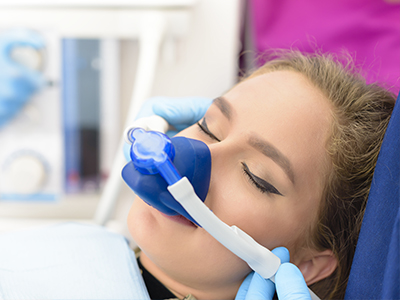
    Nitrous oxide, often called "laughing gas," is a mild sedative inhaled through a small mask over the nose. It produces rapid relaxation and is easily titrated to the patient’s comfort level. Because its effects wear off quickly when the gas is stopped, patients typically recover awareness within minutes and may be able to resume normal activity shortly after the appointment.

  • Oral sedation (medication taken before the visit)

    Oral sedation involves a prescription medication taken before the appointment to produce a calm, drowsy state. The degree of sedation varies with the drug and dose; some patients remain conversational, while others feel very sleepy and have limited recall. For safety, patients who take oral sedatives need an escort to and from the office and should plan for limited activity for the remainder of the day.

  • IV sedation (intravenous delivery)

    IV sedation is administered directly into a vein and allows for rapid onset and precise control over the level of sedation. It can be adjusted throughout the procedure to maintain the desired depth of calm. Because IV sedatives can have a stronger and longer-lasting effect, patients must follow specific preoperative instructions and arrange for transportation home afterward.

    Your dental team will advise whether fasting is required and will review medication guidance tailored to your health history before scheduling any procedure that uses IV sedation.

Preparing for and recovering from sedation

Preparation is an important part of a safe sedation experience. Before your appointment, you’ll be asked about medical conditions, current prescriptions, and supplements so the team can assess interactions or risks. Accurate, up-to-date medical information is essential — always share recent changes to your health or medication list.

On the day of treatment, follow the instructions provided by our office regarding eating, drinking, and any necessary medication adjustments. For many forms of sedation you will need someone to escort you home and stay with you briefly afterward. Recovery varies by method: some patients feel alert quickly, while others need a longer period of rest and supervision.

Aftercare guidance will include recommendations about activity, eating, and when to resume driving or work. If you experience unexpected symptoms after sedation, contact your dental office or seek medical attention as advised by your clinician.

Safety standards and who makes a good candidate

Sedation is safe when delivered by trained professionals who follow established monitoring and emergency protocols. Before any sedative is administered, we evaluate cardiac and respiratory health, medication interactions, and any allergies. Continuous monitoring during treatment helps the team respond quickly to changes and keep patients comfortable throughout the procedure.

Not every patient is a candidate for every type of sedation. Factors such as pregnancy, certain medical conditions, and specific medications can affect which methods are appropriate. Our team will discuss alternatives and collaborate with your physician when needed to develop a treatment plan that prioritizes safety.

At Today's Dentistry San Jose we are committed to transparency and patient education. We walk patients through options, explain risks and benefits, and ensure you feel prepared and supported from consultation to recovery.

Ready to learn whether sedation dentistry can make dental care easier for you? Contact us for more information or to schedule a consultation. Our team is happy to answer questions and help you decide which approach best meets your needs.

The image shows a logo with text that reads  TD  at the top, followed by  Today s Seniors Testimony,  indicating that the logo likely represents an organization related to senior citizens sharing their experiences.

Frequently Asked Questions

What is sedation dentistry?

+

Sedation dentistry offers patients with general anxiety or fears about a dental procedure the opportunity to have a more comfortable and stress-free experience. By utilizing safe and controlled sedation techniques, the patient is eased into a state of complete relaxation before the procedure. This approach eliminates discomfort, pain, and preoperative anxiety, and typically makes patients feel more at ease post-operatively, as they have little or no memory of the actual moment-to-moment procedure.

What is the difference between local anesthesia and dental sedation?

+

Local anesthesia involves an injection directly into or close to the area where a procedure is being performed. While it eliminates any sensation of pain in the targeted area, it does not affect your state of mind or level of anxiety. When a patient receives sedation, additional medications to ease anxiety and promote relaxation are employed in advance of local anesthesia. In this way, both the stress and discomfort associated with a procedure are eliminated. Sedation can be administered in a variety of forms based upon patient needs and the recommendations of the dentist or dental anesthesiologist.

What are the different types of dental sedation?

+

Choosing the most appropriate method of sedation for a procedure depends on a variety of factors such as a patient's medical history and their level of anxiety. Dental sedation can come in the form of nitrous oxide sedation, oral conscious sedation, and IV sedation. Certain patients receiving comprehensive treatment or undergoing a complex surgical procedure may require general anesthesia in a hospital setting.

Nitrous oxide, or "laughing gas," is a mild sedative, which is inhaled through a small mask over the nose. A standard in dental sedation for decades, the effects of nitrous oxide are almost immediate and wear off quickly once your procedure is completed.

Oral sedation involves the prescription of an oral medication prior to your appointment. Taken at the recommended time before your visit, oral sedation allows you to feel fully relaxed by the time you're ready for your procedure. With oral sedation, it's necessary to plan on having an escort to and from your dentist's office.

IV Sedation is administered intravenously, or directly into a vein. It is typically indicated when a deeper state of sedation is required. Your dentist will provide you with specific instructions before your visit, and require that you have an escort for the trip home from your appointment.

What is sedation dentistry and how does it work?

+

Sedation dentistry uses medication to reduce anxiety, discomfort and sensory awareness so patients can tolerate dental care more comfortably. Medications are selected to achieve a predictable level of relaxation while preserving patient safety and the ability to respond to clinical cues when appropriate. The goal is to make procedures less stressful and to enable efficient, high-quality treatment in a controlled environment.

Sedation is delivered in varying depths, from minimal relaxation to deeper states that may reduce memory of the visit. The specific drug and route of administration determine onset, duration and recovery time. Your clinician will explain the expected effects and monitor you closely from start to finish.

Who is a good candidate for sedation dentistry?

+

Candidates include patients with dental anxiety or phobia, a strong gag reflex, very sensitive teeth, or those who need extended or complex dental work that would otherwise require multiple visits. Children and patients with certain medical or cognitive conditions may also benefit when behavior management techniques alone are insufficient. A careful health history and discussion of needs guide candidacy for different sedation options.

Some medical conditions, pregnancy and interactions with current medications can affect eligibility for specific sedatives, so disclosure of all prescriptions, over-the-counter drugs and supplements is essential. The dental team will assess cardiac and respiratory status, airway concerns and other risk factors before recommending a plan. If necessary, the team will coordinate with your physician to determine the safest approach.

What are the most common types of sedation used in a dental office?

+

IV sedation is delivered directly into a vein and allows precise control over sedation depth, making it useful for longer or more involved treatment sessions. Conscious or moderate IV sedation typically leaves the patient responsive to verbal cues while reducing anxiety and awareness. Deep sedation and general anesthesia are reserved for cases that need advanced airway management and are usually provided in specialized settings with an anesthesiologist.

How should I prepare for a sedation dentistry appointment?

+

Preparation begins with a thorough medical review that includes current medications, allergies and recent changes in health so the team can anticipate interactions and risks. You will receive specific instructions about eating, drinking and medication adjustments prior to the appointment, and following those directions helps minimize complications. In most cases you should arrange for a responsible adult to drive you home and stay with you briefly after the procedure.

Wear comfortable clothing and avoid heavy perfumes or makeup that could interfere with monitoring or oxygen delivery. Bring a complete list of medications and any recent medical records that may be relevant to anesthesia planning. If you have questions about fasting, prescription timing or other preparatory steps, confirm them with the practice before your appointment.

How is patient safety monitored during sedation?

+

Monitoring during sedation includes continuous observation of breathing, heart rate, blood pressure and oxygen saturation using standard medical devices to ensure the patient remains stable. Trained dental professionals maintain vigilance throughout the procedure and are prepared to adjust medication levels or provide supportive measures if needed. Emergency equipment and protocols are kept ready, and staff receive regular training in airway management and resuscitation.

The practice follows established safety guidelines and documents the patient’s baseline vital signs, response to sedatives and recovery progress after treatment. This layered approach—assessment, monitoring and emergency readiness—reduces risk and supports predictable outcomes. At Today's Dentistry San Jose we prioritize clear communication with patients about safety measures and what to expect before, during and after sedation.

What should I expect during recovery after sedation?

+

Recovery varies by the type and dose of sedative used, but patients commonly experience drowsiness, lightheadedness or mild nausea for a period after the appointment. Nitrous oxide effects wear off quickly once the gas is stopped, while oral and IV medications may produce grogginess for several hours. Because of these effects, patients are usually required to have someone escort them home and remain with them until they have recovered sufficiently.

Follow the aftercare instructions provided by your clinician regarding activity, eating and medication resumption to support safe recovery. Avoid driving, operating heavy machinery or making important decisions for the remainder of the day if you received oral or IV sedation. If you notice unexpected or persistent symptoms after going home, contact the dental office or seek medical attention as advised.

What are the possible side effects and risks of dental sedation?

+

Common side effects are typically mild and may include nausea, temporary grogginess, dry mouth or slight dizziness during recovery. More serious complications such as airway obstruction, respiratory depression or adverse drug reactions are uncommon but possible, which is why careful preoperative screening and continuous monitoring are essential. The dental team evaluates individual risk factors and tailors the sedation plan to minimize potential harms.

Open communication about medical history, medication changes and substance use helps the team reduce risk and select the safest technique. Informed consent includes a discussion of benefits, risks and alternatives so patients know what to expect. If a patient’s risk profile is elevated, the clinician may recommend alternate strategies or a setting with advanced anesthesia support.

Will I remember the procedure if I am sedated?

+

Memory effects depend on the type and depth of sedation. Minimal sedation usually allows full recall of the visit, while moderate or deeper sedation often produces partial or complete amnesia for the procedure, which many patients find reduces anticipatory anxiety about future visits. Providers will describe the likely memory effects during the consent and planning conversation so you know what to expect.

Nitrous oxide tends to leave clear memory once the gas is stopped, whereas some oral and IV sedatives produce more pronounced memory gaps. If preserving memory of the visit is important to you, discuss that preference with the team so they can select an option aligned with your expectations. The clinician will also explain how amnestic effects influence recovery and post-procedure supervision.

Can children or patients with special needs safely receive sedation dentistry?

+

Yes, many children and patients with special needs benefit from carefully managed sedation when behavior management alone is insufficient to provide safe, effective care. The approach is individualized to the patient’s age, developmental level, medical history and the complexity of the needed treatment. Parents or legal guardians are involved in planning, and the team follows pediatric and special-needs protocols to ensure appropriate dosing and monitoring.

For young children or patients with complex medical conditions, the dentist may coordinate with pediatric specialists or anesthesiologists as needed. Nonpharmacologic techniques and a calm, structured clinical environment are used alongside sedation to improve cooperation and outcomes. Clear pre- and post-procedure instructions are provided to caregivers to support safe recovery at home.

How does the dental team decide which sedation option is best for my treatment?

+

Choosing the right sedation method starts with a comprehensive assessment of your medical history, current medications, anxiety level and the nature of the dental procedure. The team weighs the benefits and limitations of each option, preferring the least intensive method that achieves adequate comfort and safety for the planned work. Patient preference and prior experiences with sedation are also considered when creating a tailored plan.

During a consultation at the office of Today's Dentistry San Jose you will receive clear explanations about the recommended approach, preparatory steps and what to expect during recovery. The final plan reflects shared decision-making between you and the clinical team, with alternatives discussed if safety concerns or medical conditions indicate a different pathway. Documentation and informed consent complete the planning process so care proceeds with transparency and support.

A woman sitting on a dental chair receiving treatment from a dentist while another person observes.

Get in Touch with Today's Dentistry San Jose For Exceptional Dental Care

Ready to schedule your next dental appointment or have questions about our services?

We’re ready whenever you are. Whether you have a quick question about a treatment or you're set to book your next visit, our team makes getting in touch effortless. Give us a call, drop an email, or use the form below to start a conversation. Your path to a healthier, more confident smile is just a message away—reach out today and let’s discuss how we can help.