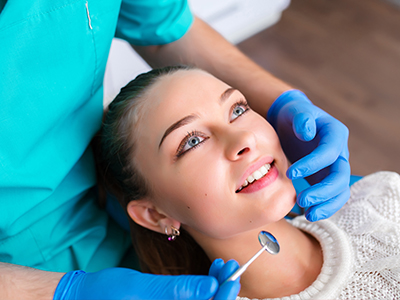
Did you know that the most common cause of tooth loss in adults is gum disease? According to statistics from the Centers for Disease Control and Prevention, one out of every two adults over the age of 30 in the United States has periodontal disease. However, the good news is that periodontal disease is almost entirely preventable. At the office of Today's Dentistry San Jose, we offer a comprehensive range of services to help patients maintain optimal periodontal health and enjoy the benefits of a smile that look, feels, and functions at its best.
Periodontal disease, more commonly known as gum disease, is a set of inflammatory diseases that affect the "periodontium", which are the hard and soft tissues surrounding and supporting your teeth. Just like tooth decay, gum disease is attributed to the harmful bacteria in dental plaque and tartar that accumulate around the teeth and under the gums.
Since the progression of periodontal disease is often painless, you may not even be aware of an ongoing disease process. For this very reason, it’s essential to practice good oral hygiene and schedule visits for regular checkups, professional cleanings, and routine care.
Taking care of your smile includes being mindful of the signs and symptoms of gum disease.
Some indications that you may have periodontal disease include:
Inflamed and red gums
Bleeding when brushing or flossing
Receding gums and exposed tooth root surfaces
Sensitivity to hot or cold temperatures
Bad breath or a bad taste in the mouth
Teeth that feel loose
New spaces developing between the teeth or a change in the bite
Change in the fit of existing partial dentures
Discharge around the teeth and gums
Sharp or dull pain when biting down or chewing food
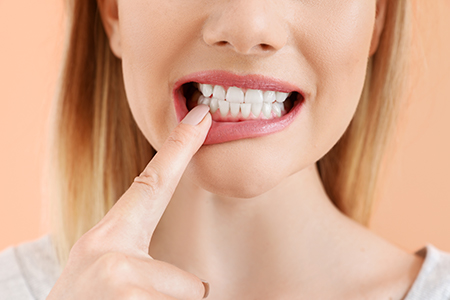
Taking care of your smile does more than keep your teeth and gums in optimal condition; good oral health also supports systemic health. In addition to being the leading cause of tooth loss in adults, researchers are finding more and more links between periodontal disease and a number of medical problems, including heart disease, stroke, diabetes, and respiratory problems.
At the office of Today's Dentistry San Jose, we emphasize the importance of prevention, early detection, and timely treatment of periodontal disease. We provide patients the guidance, support, and care required to maintain optimal periodontal health.
Gingivitis represents the initial stage of gum disease. Although it doesn’t cause overt discomfort and often goes unnoticed, there are specific signs to be aware of that indicate the start of a problem. If you notice your gums bleed when you brush, look red and inflamed, or feel a little tender, you more than likely have gingivitis.
The good news is that by treating gingivitis early, the tissue damage associated with more advanced stages of gum disease can be avoided. Despite the presence of inflammation, the overall integrity of the periodontal tissues in this stage remains intact.
Treatment instituted at this point is often sufficient to reverse the course of the disease and to avoid any permanent damage to the periodontal tissues. A series of deep dental cleanings, an improved home care regimen and a commitment to regular maintenance may be all that is required to prevent this stage of periodontal disease from progressing.

When left untreated, a case of gingivitis develops into a more advanced and damaging stage of gum disease, known as periodontitis. At this point, the connective tissue and bone that hold the teeth in place begin to break down. With the progression of periodontal disease and periodontitis, more and more tissue loss ensues. Damage often includes an increase in pocketing between the teeth and bone, gum recession, and bone loss. As unresolved periodontitis goes from mild to moderate to severe, it increasingly compromises the soft and hard tissues supporting the teeth.
Periodontal treatment in this phase is designed to halt the progression of the disease and to restore tooth support as possible. Treatment may involve medications to control the bacteria and reduce the size of the pockets between the teeth and gums, gum surgery, as well as bone and tissue grafts.
At the office of Today's Dentistry San Jose, we offer personalized, state-of-the-art solutions to help you maintain healthy gums and an attractive, well-functioning smile. As skilled providers of care, we utilize leading-edge technology and treatment methods to address a broad range of periodontal conditions and needs.
Thanks to advances in care, periodontal treatment today not only helps to halt the progression of gum disease but also delivers effective solutions, including bone grafting and regenerative procedures to repair tissue damage, restore bone volume, improve cosmetics, or provide adequate support for the placement of dental implants.
The type of periodontal treatment you receive depends on several factors including the stage of periodontal disease, the extent of tissue damage, your overall oral health, existing medical conditions, and other considerations in care. After a thorough assessment of your case, we’ll discuss your options to reestablish and maintain optimal periodontal health. We welcome your questions and are always on hand to provide guidance and address your concerns.

When periodontal disease is detected early in its onset, conservative or non-surgical methods of care combined with improved hygiene routines can restore periodontal health. While periodic, professional cleanings are sufficient to maintain periodontal health in patients that do not have gum disease, once gingivitis is present, deeper cleanings and possibly other non-surgical methods of care are recommended to treat the condition.
The American Academy of Periodontology emphasizes achieving periodontal health by means of the least invasive and cost-effective treatment approaches to care. Deeper cleanings, which include Scaling and Root planing, are non-surgical procedures that are considered the first line of defense against the progression of periodontal disease.
With scaling and root planing, any plaque and tartar (hardened dental plaque) that have accumulated below the gumline are carefully removed, and then the root surfaces of the teeth are smoothed. Since periodontal disease is an inflammatory response to plaque, tartar, and bacterial toxins, by simply mechanically eliminating these agents, the progression of gum disease can be halted. In addition to removing plaque and tartar with a scaling and root planing procedure, antimicrobial medication placed under the gumline or systemic medications can be used as adjuncts to care to further reduce the bacterial population.
If non-surgical approaches to managing periodontal disease do not achieve the desired outcome, surgery may be recommended to halt its progression and repair damage as possible.
When gum disease has advanced beyond the initial stage, periodontal surgery is often recommended to effectively remove bacteria and tartar from around the teeth, reduce gingival pocket depth, restore lost tissue as possible, and halt disease progression. It’s essential to keep in mind that gum disease is a progressive condition. If appropriate measures are not taken, gum disease continues to compromise the support of the teeth and have consequences to one’s overall dental health and well-being.
As untreated gingivitis evolves into more advanced stages of gum disease, periodontal pockets deepen, the bacteria become more difficult to remove, and the gaps between the surface of the teeth and gums get larger. When pocket depth increases to the point of being beyond the reach of deep cleanings and other conservative methods of care (5mm or more), gum surgery to clean and treat the damage to gums and underlying bone is typically recommended.
The good news is that with proper surgical treatment followed by improved oral hygiene, the chances of tooth loss, further damage to the bone and soft tissues supporting the teeth, and complications from health problems that are linked to periodontal disease can be decreased.
The goals of pocket reduction surgery are to accomplish the following:
Remove sub-gingival bacteria beneath the gums and from the surfaces of the roots of the teeth
Halt damage to the underlying bone, and recontour the affected hard tissues as needed
Reduce pocket depth to facilitate easier cleaning of the teeth and gums and the maintenance of optimal periodontal health
In many cases, a periodontal procedure, which is known as flap surgery, is frequently recommended. During this procedure, the gums in the affected area are reflected away from the teeth and supporting bone. Now, the pocket and roots of the teeth can be thoroughly cleaned and supporting tissues recontoured as needed. When this step gets completed, the tissue flag gets sutured back into place.
Today, in addition to conventional surgical approaches to care, dental lasers are also used to perform select periodontal procedures. When applicable, laser technology can help treat periodontitis, reduce pocket depth, address peri-implantitis, and remove or recontour gingival tissues for cosmetic purposes.
For more information on our office and the many services we provide, give us a call today.
Most people don’t realize that periodontal disease is the leading cause of tooth loss among adults. According to statistics from the Centers for Disease Control and Prevention, one out of every two adults over the age of 30 in the United States has periodontal disease.
You may be surprised to learn that the human mouth is home to a wide variety of microbes. The fact is that over 700 different strains of bacteria have been detected in the oral cavity. Although some of these bacteria are beneficial, others are harmful to oral health. Without proper oral hygiene and routine dental care, these harmful bacteria can cause tooth decay and gum disease, compromising both your oral health and overall wellbeing.
In addition to inadequate oral hygiene and infrequent professional care, other factors, including smoking, genetic tendencies, and unchecked diabetes, can contribute to the escalation of periodontal disease.
Your gums and teeth have an interdependent relationship, which means healthy teeth depend on the support of healthy gums. Also, taking care of your smile does more than keep your teeth and gums in optimal condition; good oral health also supports systemic health. In addition to being the leading cause of tooth loss in adults, researchers are finding more and more links between periodontal disease and a number of medical problems, including heart disease, stroke, diabetes, respiratory problems, and adverse pregnancy outcomes such as pre-term and low birth-weight babies.
If you notice that your gums are bleeding with the slightest pressure while brushing or flossing, it’s a sign of gingivitis. Although gingivitis is the earliest stage of gum disease, it can easily be reversed with deeper cleanings as well as an improved regimen of oral hygiene at home.
In the absence of professional treatment and better home care, gingivitis progresses to the next stage, which is known as periodontitis. In this stage, the connective tissue and bone that hold the teeth in place begin to break down with an increase in pocketing between the teeth and bone, gum recession, and bone loss. Without proper treatment by your dentist, periodontitis will progress from a mild to moderate loss of supporting tissue to the destruction of the bone around the teeth.
Although gingivitis can often be reversed with improved oral hygiene and professional cleanings, as periodontal disease advances, more extensive procedures are required to halt its progression. Based on a complete assessment of your periodontal health and a review of possible contributing factors, our office will recommend the best options in care. Treatment for periodontitis may include a series of deeper cleanings known as root planing and scaling, surgical procedures to reduce pocket depth, bone or tissue grafts, laser procedures, or antimicrobial medications.
The cost of care depends on the type of procedures required to restore your periodontal health. If you have dental insurance, plans often cover treatment to prevent gum disease as well as many procedures to treat the various stages of gum disease. Our goal is to help patients restore and maintain good oral health. We do all we can to help you begin care without additional stress or delay. Our business office works with you to maximize your benefits and provide easier, more convenient payment options.
By seeing our office regularly for care and doing your best to eat a healthy diet and practice good oral hygiene, you can keep your smile in tip-top shape as well as protect your overall wellbeing.
At the office of Today's Dentistry San Jose, we provide a comprehensive range of services to address all your oral healthcare needs. You can rest assured that your smile is in the best of hands at our office. Our skilled and experienced team maintains a position at the forefront of advances in care and remains dedicated to providing the highest quality of skilled and compassionate treatment.