Invisalign® offers a modern alternative to traditional braces by moving teeth with a sequence of clear, removable aligners. Designed with advanced digital planning and medical-grade materials, these aligners let patients pursue tooth-straightening without the visual and lifestyle compromises that often come with metal brackets and wires. For many adults and teens, that combination of discretion and predictability makes clear aligner therapy an appealing option.
At Today's Dentistry San Jose, we view Invisalign as a treatment pathway rather than a single product: a customizable system that integrates imaging, clinical oversight, and patient participation. The process begins with a precise digital evaluation and continues through carefully timed stages of alignment. Throughout, our focus is on delivering efficient tooth movement while protecting long-term oral health.
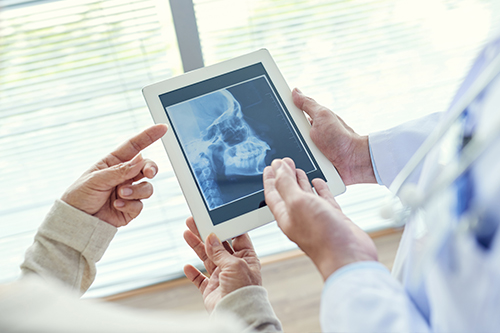
Invisalign treatment is planned using 3-D imaging that maps your teeth and bite in detail. The software models the desired final positions and divides the overall correction into a series of small, controlled steps. Each set of aligners reflects the next step in that plan, applying gentle pressure where teeth need to move.
Because the entire treatment is mapped out digitally, clinicians can visualize the sequence of tooth movements and make adjustments before fabrication begins. This upfront planning helps minimize surprises during treatment and provides a clear roadmap for the clinical team and the patient to follow.
The materials and fit also matter: aligners are made from a medical-grade thermoplastic engineered to hold form and transmit force predictably. When worn as instructed, they move teeth incrementally and consistently, reducing uncontrolled or abrupt shifts that can occur with less precise appliances.
Clear aligners are effective for a wide range of alignment issues, including mild to moderate crowding, spacing, and certain bite irregularities. Many patients choose aligners because they want a treatment that fits into an active lifestyle — one that allows normal eating, brushing, and social confidence during therapy.
Not every case is best treated with aligners alone. Complex skeletal discrepancies or severe bite problems may require interdisciplinary care or traditional orthodontic appliances. During an initial evaluation, the dentist will assess tooth positions, jaw relationships, and overall oral health to determine whether Invisalign is an appropriate primary option.
Age is less of a barrier than the presence of healthy periodontal tissues and a cooperative treatment approach. Adults and adolescents alike can benefit when the supporting gums and bone are healthy and the patient is prepared to follow the wear schedule and attend regular monitoring visits.
Treatment begins with a comprehensive digital scan and clinical assessment. From these records, a customized treatment plan is created that shows the projected tooth movements and estimated number of aligner stages. Patients receive a series of aligners and instructions on how long to wear each set — typically most of the day, removing them briefly for eating and oral hygiene.
Follow-up appointments are scheduled at regular intervals so the clinician can evaluate progress and make any necessary refinements. These visits are typically shorter than traditional orthodontic appointments because there are no wires or brackets to adjust, but they are essential for confirming movement and addressing any areas that need attention.
Because aligners are removable, patients must be diligent about the daily wear time and keeping the trays clean. Proper adherence to the schedule produces the best results and reduces the risk of treatment delays. If refinements are required after the initial series, additional aligners can be programmed and delivered to complete fine-tuning.
While the aesthetic appeal of nearly invisible trays is a primary motivator for many, clear aligners also support better oral hygiene during treatment. Because trays are removed for brushing and flossing, patients can maintain their routine without navigating around brackets, which helps reduce plaque buildup and gingival irritation during therapy.
Aligner therapy can also be more comfortable for many patients. Without the need for metal wires and frequent adjustments, the sensation of tooth movement tends to feel gentler. When attachments or small staging techniques are used to accomplish specific movements, they are integrated into the plan with the intention of optimizing both comfort and effectiveness.
Finally, the digital planning component allows clinicians to coordinate aligner treatment with other restorative or periodontal care when needed. That integrative potential makes Invisalign a flexible tool within a broader treatment strategy focused on long-term oral health and functional outcomes, not just appearance.
Completing aligner therapy is an important milestone, but preserving the result requires a maintenance plan. Most patients transition to retainers that support the new tooth positions; the type and schedule depend on the original case and the clinician's recommendations. Consistent retainer wear is the most reliable way to prevent relapse.
Ongoing dental care — including routine exams and cleanings — remains essential after straightening. Regular visits allow the dental team to monitor occlusion, check restorations, and address any emerging issues that could influence tooth position over time. Patients are encouraged to continue strong home-care habits to protect both alignment and overall oral health.
When discussed at the outset, retention is incorporated into the treatment plan so patients understand expectations for the years after active therapy. Thoughtful follow-up and clear communication help translate short-term improvement into a lasting, healthy smile.
As part of a practice committed to clinical excellence, we work with industry-leading aligner manufacturers and rely on evidence-based protocols to guide treatment decisions. Clinical data and cumulative case experience inform when aligners are appropriate, how to sequence movements, and when to use auxiliary techniques for more predictable outcomes.
Below is an overview of the typical steps patients experience when choosing aligner therapy with our team.

Your initial appointment includes a full oral exam and digital records so the dentist can determine whether aligner therapy matches your treatment goals and oral health needs.

We use a precise digital scan to visualize movement and show a projected outcome. The plan defines when aligners will be changed and how progress will be monitored throughout therapy.

Aligners are manufactured to match the clinical plan and designed to be comfortable for daily wear. Small refinements can be incorporated if needed as treatment progresses.

From the first set of trays through final refinement, the dentist will review movement at scheduled visits and coordinate any adjustments necessary to stay on track.
Watch brief videos that illustrate real-world aspects of clear aligner therapy and the patient experience.
Invisalign® is a versatile, digitally driven option for many patients seeking straighter teeth with minimal interruption to daily life. If you’d like to learn whether aligner therapy is a fit for your smile, contact Today's Dentistry San Jose for more information and to arrange a consultation.
*Invisalign is a registered trademark of Align Technology, Inc.

There are many options for patients who want to avoid metal braces! The most popular alternative orthodontic treatment is Invisalign®, which are clear plastic aligners designed to straighten teeth. After an examination of your teeth, your dentist will determine which option is best suited to your wants and needs.
According to the Invisalign® website, the cost for treatment is approximately the same as the cost for metal braces. A portion of this cost may be covered by your insurance. Please call us to set up a consultation and discuss potential payment plan options.
The first step is to schedule a consultation with your doctor, so they can devise a treatment plan that is best suited to your individual dental needs. Once approved, you will receive your first set of aligners. Your doctor will then regularly monitor the movement of your teeth and new aligners will be ordered according to the progress made in your treatment plan.
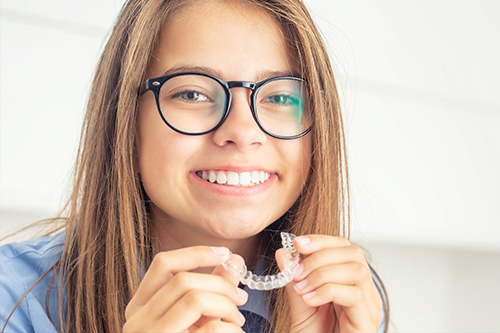
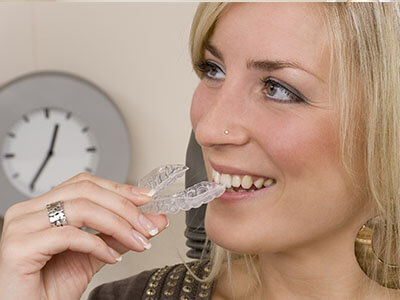
Invisalign® aligners are made of clear, flexible plastic. The company received a patent for this material – SmartTrack® – to be used exclusively for Invisalign treatment purposes. These aligners are FDA approved and nearly invisible!
Your doctor will give you an estimate regarding how long your Invisalign® treatment should take, which will depend on your specific needs. The average length of time for treatment is approximately 12-18 months. However, some patients may see results far sooner. Remember to wear your aligners exactly as instructed by your doctor to obtain the best results.
Your doctor will most likely recommend that you wear retainers following your Invisalign® treatment. This is a precaution that will prevent your teeth from shifting back to their original positioning. It is important to follow your doctor's instructions exactly to ensure long-lasting results.
You must wear your aligners for up to 22 hours daily. You may remove them for eating, drinking and regular oral hygiene.
No. Unlike braces, you may eat whatever you like as long as you remove the aligners before eating. Prior to placing the aligners back on, it is important to brush your teeth and the aligners after you eat.
Like any orthodontic treatment, there is a short adjustment period. The more you speak with the aligners on, the quicker you will adjust.
There will be some pressure and minor discomfort for a day or two after each initial insertion. This is a sign that your teeth are moving sequentially into their final position.
It is recommended that you remove your aligners prior to chewing gum as the gum will stick to the aligners.
We discourage smoking with aligners as the cigarette smoke will tend to discolor them.
Brushing them with toothpaste will keep them fresh and clean.
Regular office visits are every five to six weeks. This will ensure that your Invisalign treatment is progressing as planned.
All orthodontic patients are instructed to wear their retainers at night indefinitely. Sleeping with your retainers in at night will ensure a healthy bite and maintain the new position of your teeth.
Yes, if their teeth, including second molars, have grown in completely.

Invisalign is a clear aligner system that straightens teeth using a sequence of removable, custom-made trays. Each aligner is designed to move teeth a small amount until the desired position is reached. The treatment relies on precise digital planning and medical-grade thermoplastic to deliver controlled forces. Because trays are nearly invisible and removable, many patients choose aligners to minimize disruption to daily life.
The aligner approach functions as a treatment pathway that integrates imaging, clinician oversight, and patient participation. From the initial scan through final refinement, the dental team monitors progress and adjusts the plan when necessary. This collaborative model emphasizes predictable tooth movement while protecting long-term oral health.
Treatment begins with a 3-D digital scan that maps tooth positions, bite relationships, and surrounding anatomy. Specialized software simulates the intended final outcome and breaks the overall correction into a series of small, controlled steps. Each set of aligners corresponds to the next step and applies gentle, directed pressure where teeth need to move. Because the sequence is visualized in advance, clinicians can anticipate challenging movements and plan accordingly.
Aligners are fabricated from a medical-grade thermoplastic that holds form and transmits force predictably. Fit and material quality influence how efficiently force is delivered and how comfortable the trays feel. When worn as instructed, aligners promote incremental, consistent movement and reduce the risk of uncontrolled shifts.
Clear aligners are well suited for mild to moderate crowding, spacing, and many common bite irregularities. Adults and adolescents who have healthy gums and sufficient bone support are often good candidates. Patients who value a discreet, removable option that fits an active lifestyle frequently choose aligners.
However, not every case is best treated with aligners alone; severe skeletal discrepancies or complex orthodontic problems may require traditional braces or surgical intervention. The dentist will evaluate tooth positions, jaw relationships, and overall oral health during a comprehensive assessment to determine the most appropriate approach. When necessary, aligners can be integrated into a broader treatment plan that includes restorative or periodontal care.
Your journey begins with a clinical exam and a precise digital scan that generate the records used to create a customized treatment plan. The plan shows projected tooth movements, the estimated number of aligner stages, and instructions for wear time. Patients typically wear each set of trays for a prescribed period, removing them to eat and to perform oral hygiene.
Follow-up appointments let the clinician confirm movement, make refinements, and address any concerns with shorter, focused visits. Because trays are removable and there are no wires to adjust, many appointments are quicker than traditional orthodontic visits. If you are considering treatment, schedule a consultation with Today's Dentistry San Jose to review the plan and expected milestones.
Treatment duration varies with case complexity, the types of movements required, and how consistently aligners are worn. Simple alignment issues may be resolved in a matter of months, while more involved cases can take a year or longer. Digital planning provides an estimated timeline, but that projection can change if refinements are needed.
Regular monitoring helps keep treatment on track and allows timely adjustments if progress deviates from the plan. Because patient adherence to wear time strongly influences speed, clinicians emphasize consistent use to avoid delays. Refinements or additional aligner sets are common and should be expected as part of a thorough treatment process.
Attachments are small, tooth-colored composites bonded to selected teeth to provide grip and guide specific movements that aligners alone cannot deliver as predictably. Other auxiliaries, such as interproximal reduction (IPR) or elastics, may be recommended for particular corrections. These techniques are planned digitally and used selectively to improve accuracy and outcomes.
Attachments are designed to be discreet and are removed once the movement they support is complete. Your clinician will explain why an auxiliary is needed, how it will affect daily care, and what to expect when it is placed or removed. Using these tools judiciously helps achieve results that would otherwise be difficult with aligners alone.
Remove aligners for eating and brushing to protect the trays and maintain oral hygiene; rinse them under cool water before reinserting. Clean aligners daily with a soft brush and mild, nonabrasive cleanser or water; avoid hot water, which can warp the plastic. Storing trays in their case when not in use reduces the chance they are lost or damaged.
Periodic soaking with a manufacturer-recommended cleaner can help prevent odor and staining while preserving material integrity. Maintaining excellent oral hygiene—regular brushing and flossing—reduces plaque and helps trays fit properly throughout treatment. If a tray becomes damaged or stops fitting, contact the dental team promptly to determine the proper next step.
Consistent wear time is one of the most important factors that determines how well aligner therapy progresses. Most clinicians recommend wearing aligners for approximately 20 to 22 hours a day, removing them only for meals and oral hygiene. Skipping wear or frequently leaving trays out slows tooth movement and can compromise the predictability of results.
Establishing daily routines and using reminders or carrying a portable case can help maintain compliance, especially during travel or social events. Open communication with the dental team about challenges with wear can lead to practical strategies to improve adherence. Adhering closely to the prescribed schedule produces more efficient treatment and reduces the need for additional aligners.
After active alignment is complete, a retention plan helps preserve the new tooth positions and minimize relapse. Retention may include removable retainers or fixed bonded retainers, with a schedule tailored to the original case and clinician recommendations. Patients should understand that ongoing retainer wear is the most reliable way to protect the result.
The office of Today's Dentistry San Jose incorporates retention into the overall treatment plan so patients know what to expect after active therapy ends. Routine dental exams and cleanings remain important to monitor occlusion, evaluate restorations, and support long-term oral health. If minor settling occurs, the clinician can recommend appropriate measures to address small changes and safeguard the alignment.
Yes—Invisalign can be coordinated with restorative, periodontal, or implant care to achieve both functional and aesthetic goals. Digital planning enables clinicians to sequence movements and time other procedures so that restorative margins, implant positions, or periodontal health are optimized. Close collaboration between the dentist and any specialists ensures that aligner therapy complements broader treatment objectives.
In complex cases, the clinician will outline a comprehensive plan that specifies when alignment should occur relative to restorative or surgical steps. This integrated approach reduces the risk of conflicting treatment outcomes and promotes a predictable pathway to the desired result. Clear communication and coordinated scheduling make it easier for patients to navigate combined care efficiently.

Ready to schedule your next dental appointment or have questions about our services?
We’re ready whenever you are. Whether you have a quick question about a treatment or you're set to book your next visit, our team makes getting in touch effortless. Give us a call, drop an email, or use the form below to start a conversation. Your path to a healthier, more confident smile is just a message away—reach out today and let’s discuss how we can help.